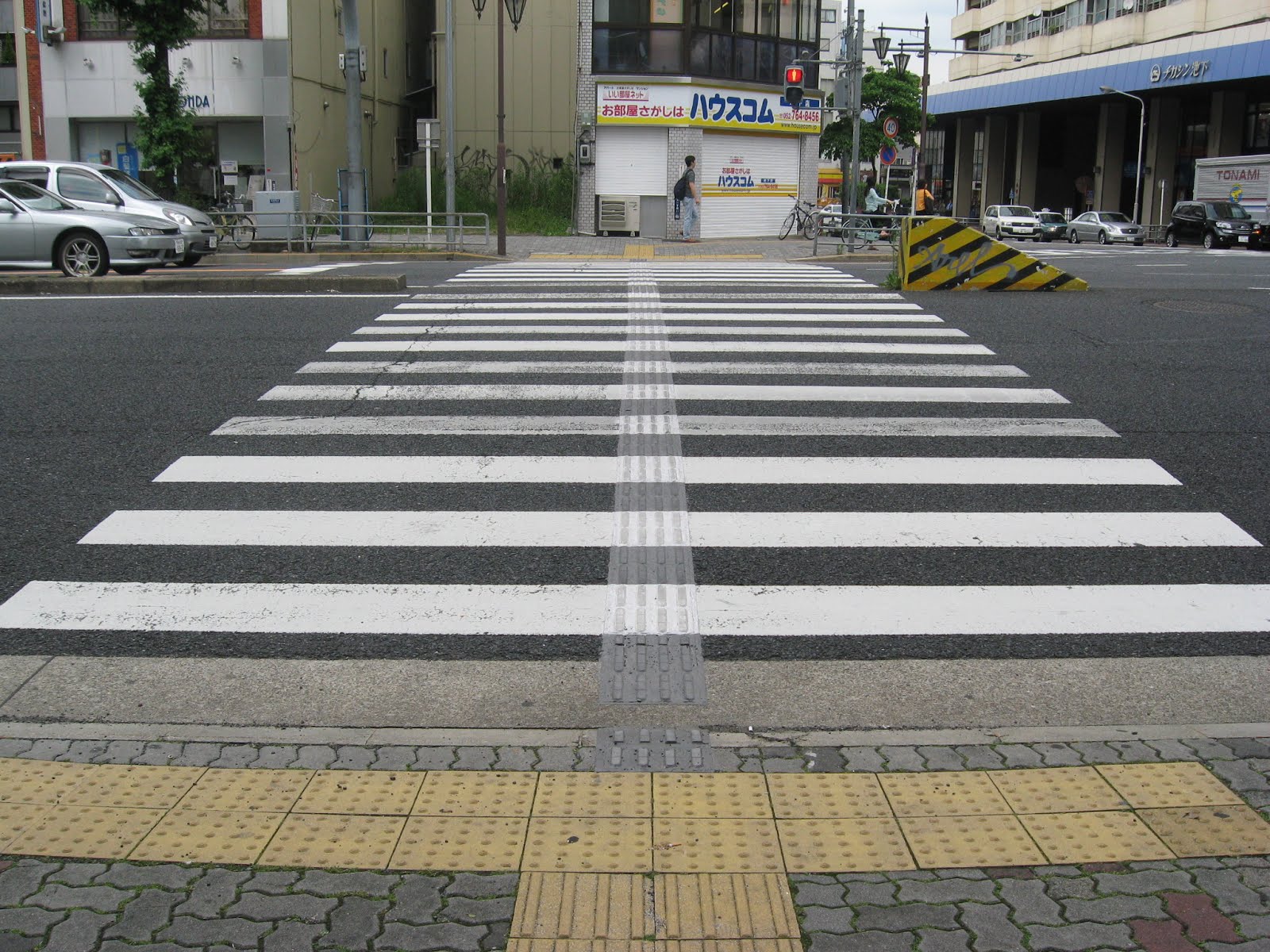
Today Robert and I are going on a field trip. We are going to walk around the streets looking for signs as part our Spec road safety. I need to take a camera so Robert can take photos to load onto my blog. When we come back I will be doing worksheets with Robert.
Tomorrow I will be seeing you guys. I will be in the classroom learning about networking with Fiona, I hope to stay for morning tea and catch up with my friends.
In the video, children come up with quirky road safety wisdom beyond their years.
A new road safety campaign features kids giving road safety advice as police urge motorists to 'Make it to Monday' this long weekend.
The "Make it to Monday" road safety campaign starts today as Police release a video on social media featuring primary school children using the hashtag #MakeItToMonday.
In the video, children come up with quirky road safety wisdom beyond their years as they appeal to parents, caregivers and other motorists to drive safely and help protect friends, and loved ones on the road.
During last Queen's Birthday Weekend, no-one died on the roads, a result road safety agencies are asking all road users to once again strive for.
"Police and its road safety partners are encouraging road users to make better decisions to keep themselves and others safe on the roads - whether it's this long weekend or at any other time," says Assistant Commissioner Road Policing Dave Cliff.
"Buckling your safety belt, driving at a safe speed and not drinking and driving are three of the most basic, life-saving choices that every motorist has the power to make this Queen's Birthday weekend.
Making that right choice can be all the difference between life, death or permanent injury - whether for yourself, your mates, your family - or for someone else's," Mr Cliff says.
This video is being supported by a public event in Wellington, with a display of 254 pairs of shoes to represent each life cut short on the roads in 2013.
"The steps to survive on our roads are so simple that our children can readily recall them, but often it's the grown-ups who are forgetting," Mr Cliff says.
"The display of shoes reminds us that behind every statistic is a child, a best friend, a mate, a mum, or a loved one who has tragically lost their life.
Already this year, crashes have claimed the lives of 125 people - 24 more than at the same time last year.
In the vast majority of cases, alcohol, speed and not wearing safety belts were factors. "While we often get focused on the statistics, behind every crash is a real person whose death or injury is preventable.
"If we keep going at the current rate, there will be at least another 180 empty pairs of shoes representing those lives that have been needlessly taken from us by the end of this year," Mr Cliff says.
ACC's Chief Executive Scott Pickering says after last Queen's Birthday weekend ACC received over 200 claims resulting from vehicle crashes, and throughout 2013 around 30,000 Kiwis were injured on the road.
"I urge everyone to drive safely and enjoy the extended break this weekend."
Mr Cliff says while Police will be doing everything in their power this holiday weekend to enforce the law, save lives and reduce deaths and injuries, passengers, friends and family can also directly influence driver behaviour by supporting them to make the right choices.
"Even if you're not driving, you can play your part - whether it's by not letting a mate drive drunk, by wearing your own safety belt, or speaking up in the car when you see speeding or other unsafe behaviour."
As part of the weekend's road policing activities, Police will be again strictly enforcing a reduced 4km/h speed threshold from 4pm on Friday 30 May until 6am on Tuesday 3 June, with a highly visible presence on the nation's roads.
Mr Cliff says every driver stopped can also be expected to be breath tested, with Police having little tolerance for anyone not wearing a safety belt, driving dangerously or in a way that puts other innocent road users at risk.
Those towing or driving more slowly are also encouraged to pull over where safe to allow others to pass so traffic does not build up behind and cause additional frustration.
"Drivers need to be mindful that holiday weekend driving is often more risky than at other times, and adjust their driving accordingly," Mr Cliff says.
"Typical hazards can include larger traffic volumes, people driving further on unfamiliar roads, and the potential for distraction with children and others in the car, while the winter weather can also make conditions more hazardous.
We also suggest drivers resist temptation by putting their cellphone away.
"While safer roads and safer vehicles all help to make a difference, following basic road safety advice will help us all Make it to Monday."
It is really important to wear a seat belt in case of a car accident.If the car needs to stop suddenly a seat belt will stop you from flying forwards,a seat belt will always keep you safely in one place in your seat.
Bradley
The reason why we need to wear a seat belt is so we won’t fly around inside the car if it has an accident. Another reason why we wear a seat belt is so that it will keep us firmly in our seats when we are travelling.
Natasha
I have to wear my seat belt because if there is a car accident I will fly forward and crack my head on the windscreen which could hurt me very badly.It is also the law to wear a seat belt when travelling in the car.
Vikki
It is important to wear your seat belt because it is dangerous to not wear a seat belt,if you have an accident you could fly out of the window and get badly hurt.
The driver always asks if we are wearing our seat belt before we start travelling.
Aidan
It is important to wear seat belts because if you don’t you will fly forwards and crack your head if the car stops quickly.Our parents are obeying the law by making us wear our seat belts.
Nathan
We need to wear our seat belts to be safe in the van because if we don’t we will go forwards if the van has to stop suddenly or if we have an accident.
It was fun to go on the train and ferry. I liked the train and the ferry ride because I learnt to be safe. It was fun on the ferry because I liked seeing the buildings from the ferry.
We went to the Maritime Museum. I liked the trip. It was cool because I learnt about boats. I saw the whale tail artwork when we were eating our lunch .
I hope we can go to the Maritime Museum again to learn more about safety at sea.
Walking has many benefits. It’s easy, free and fun – and it helps you stay fit and healthy. What’s more, the more of us who walk to get around, the fewer vehicles on our roads. The fewer vehicles, the less harmful gases get emitted as well as less traffic noise and pollution.
Walking smart
Whether for leisure, pleasure or as a way to get around, walking is an easy, healthy and safe way to travel. There are a number of things you can do to keep it that way. Follow these tips:
General safety habits:
use pedestrian crossings or cross at traffic signals
look and listen for traffic entering or leaving driveways
walk on the footpath, close to the houses and away from the road
hold hands if walking with a young child near roads or in carparks.
Crossing the road
When there’s no pedestrian crossing
Cross the road only when it’s safe to do so - it takes time for a vehicle to stop so be patient and wait for a gap in the traffic.
Use the kerb drill:
Find a safe place to cross – like at a crossing or away from a corner.
Stand one step back from the kerb. Practise this by walking to the kerb and taking one step back.
Look and listen for traffic coming from all directions.
If there’s traffic coming, wait until it has passed, then look and listen for traffic again.
When there’s no traffic coming, walk quickly straight across the road, looking each way for traffic.
At night, cross close to a street light if you can.
If you’re getting off a bus, wait until it moves off before checking for moving vehicles.
Using a pedestrian crossing
Use official crossings where possible – in fact, if you’re within 20 metres of a pedestrian crossing, the law requires you to use it.
Check that any approaching vehicles have seen you and can stop before you step out.
Cross as quickly as you are able.
For crossings with signals, only cross when the green person or message shows.
Watch out for courtesy crossings
Cars don’t have to stop for pedestrians at courtesy crossings (unpainted crossings often made of other materials like bricks or pavers). Use these crossings with care.
Crossing at intersections
Choose a place where you can see, and be seen by, traffic from all directions.
Crossing between parked cars
Crossing the road between parked cars should be your last option, even if you have to walk a little further to get to a clear stretch of road. If you have to cross between parked cars:
stop on the footpath and look carefully for a gap between two parked vehicles that don’t show signs that they might move off (eg that don’t have drivers, exhaust fumes, engine noises, lights)
if you can’t see inside either vehicle choose another gap
make sure you have a safe place to go on the other side of the road (ie a place that is not blocked by a driveway or parked vehicles)
walk to the outside (headlight) corner of the parked vehicle and stop where you can see the traffic, and drivers can see you
look and listen for traffic up and down the road
check that crossing the road is still safe and, only if it’s safe, cross the road by walking quickly and straight across the road
while crossing continue to look and listen around you for traffic.
Walking where there are no footpaths
Walk facing the oncoming traffic.
Keep as far off the road as possible.
Walk in single file - if in a group, the shortest child should be at the front and tallest at the back so everyone can see.
See more tips on how to stay safe and follow the simple rules in
This year’s concerts will bring together solo instrumentalists and vocalists, chamber ensembles and choirs from around the Auckland region, as well as showcasing the brilliant musical talent from the University of Auckland School of Music and selected secondary schools.
22 May APO Young Achievers
Every year the Auckland Philharmonia Orchestra chooses the most talented young musicians and provides opportunities for them to develop their potential through a mentoring programme. We welcome these young stars to our series in a programme featuring a variety of instruments.